Best Credit Score Apps UK: Cover All Three Agencies Free
Free UK credit score apps compared by the agency each reads, plus the new Experian 0 to 1,250 and TransUnion 0 to 999 scales and what counts as good.
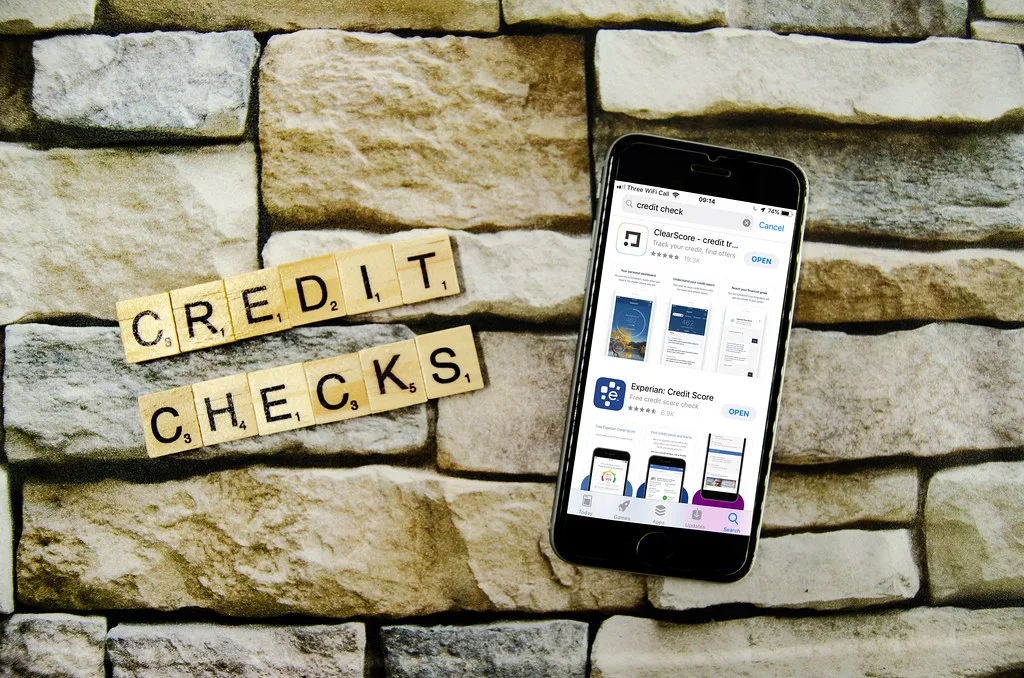
Best Credit Score Apps in the UK, and the Credit Builders Worth Adding
Choosing the best credit score app UK lenders actually read starts with one fact most people miss: there is no single UK credit score. Each of the three credit reference agencies keeps its own file on you and scores it on its own scale, so the number ClearScore shows you is not the number a mortgage adviser sees on Experian. That is not a flaw in the apps, it is how UK credit works, and once you understand it you can pick the free apps that let you watch all three files and, if your score needs work, the credit builder apps that add positive history to them.
This guide splits the two jobs cleanly. First, the free apps that let you see and monitor your credit file. Second, the paid credit builder apps that report new payments to the agencies to lift a thin or damaged score. We cover which agency each one uses, what it costs in plain terms, and who each is actually for.
The best credit score apps at a glance
- Best free app overall: ClearScore. Free for life, reads your Equifax file, refreshes monthly.
- Best for TransUnion data: Credit Karma. Free for life and the only major UK app that refreshes weekly, so you see a repair land sooner.
- Best for the score most lenders check: the free Experian app. Monthly, on the 0 to 1,250 scale.
- Best view of all three agencies: Checkmyfile. The only service that puts Experian, Equifax and TransUnion in one report. 7 day free trial, then £14.99 a month.
- Best credit builder for renters: CreditLadder. Reports rent you already pay, free to one agency of your choice.
- Best credit builder with no rent to report: Loqbox Save. £2.99 a week after a 7 day trial, and your savings come back to you at the end.
Install ClearScore, the free Experian app and Credit Karma side by side and you are watching all three UK credit files for nothing. The rest of this page explains why that trio beats any single app, what a good score looks like on each of the three scales, and exactly what the paid credit builders charge.
The three UK credit reference agencies (and why it matters)
Every free credit score app is really a window onto one of three agencies:
- Experian scores you from 0 to 1,250 (it was 0 to 999 until Experian widened the scale). It is the largest agency and the one many mortgage and mainstream lenders check.
- Equifax scores you from 0 to 1,000. ClearScore is the best-known free window onto your Equifax file, and since March 2026 Equifax has its own free app too.
- TransUnion scores you from 0 to 710, moving to 0 to 999 between September 2026 and June 2027. Credit Karma, TotallyMoney, the MoneySavingExpert Credit Club and the Lloyds and NatWest banking apps all read TransUnion data.
An earlier version of this section still quoted Experian’s old 0 to 999 range and TransUnion’s 710 ceiling without the change; both are corrected above.
Because lenders each choose which agency (or agencies) to check, a strong score on one file and a weak one on another is common. Serious applicants, for a mortgage especially, benefit from watching all three rather than trusting a single app. The good news is the free apps below cover all three between them at no cost.
Best free credit score apps in the UK
These apps are genuinely free, funded by showing you card and loan offers you are likely to be accepted for. You are never obliged to take one, and using them is a soft search that never touches your score.
ClearScore (Equifax)
ClearScore is the app most UK users start with. It is free for life, shows your Equifax score and full report, and refreshes monthly. The layout is clean, it flags changes and possible errors, and it will not nag you toward a paid tier because there is no meaningful paid tier to push. If you only install one free app, this is the safe default.
Credit Karma (TransUnion)
Credit Karma reads your TransUnion file and updates it every week, more often than most rivals. That faster refresh makes it useful when you are actively repairing a file or waiting for a defaulted account to update. Like ClearScore it is free forever and shows the factors moving your score: credit use, payment history, recent applications and the age of your accounts.
Experian (Experian)
The free Experian app gives you your Experian score, updated monthly. Because so many lenders check Experian, seeing this number is worth doing even if ClearScore is your daily app. Experian pushes a paid subscription with extras like a boosted score feature and daily report access, but the free score alone covers what most people need.
MoneySavingExpert Credit Club (TransUnion)
The MSE Credit Club is a free service, also built on TransUnion data, with an “affordability” and eligibility angle that estimates your odds of acceptance for specific cards and loans. It is a solid free companion to an Experian or ClearScore view.
TotallyMoney (TransUnion)
TotallyMoney is the other free-forever TransUnion app, and the one to reach for if you want the freshest possible number. Its report refreshes when you log in, and it asks TransUnion for an updated report and score every month on top. It is FCA authorised and, like the rest, funds itself on eligibility-checked card and loan offers rather than a subscription.
myEquifax UK (Equifax, new in 2026)
Equifax now has its own free app. myEquifax UK went live on the App Store on 5 March 2026 and Equifax announced it on 23 March, pitched mainly at the FCA’s motor finance redress scheme, which the regulator estimates could cover around 14 million car finance agreements (Equifax press release). It gives you the free Equifax Basic account: your Equifax score out of 1,000, updated monthly when you log in, plus a car finance checker that lists your past motor finance agreements with a button to copy the reference numbers, dates and amounts into an email to the lender. The full statutory report opens on equifax.co.uk rather than in the app.
It is worth installing if you have had car finance in the past and lost the paperwork. As an everyday score app it is not there yet: on 17 September 2026 it held a 2.6 out of 5 rating from 84 reviews on the UK App Store, against ClearScore’s 4.8 from nearly 73,000. For watching your Equifax number month to month, ClearScore is still the better experience; both read the same file.
Between ClearScore or myEquifax (Equifax), Credit Karma or MSE (TransUnion) and the free Experian app (Experian), you can watch all three files for nothing. That trio is the strongest free setup in the UK.
The best credit score apps compared
| App | Agency and score range | Refresh | Cost | Best for |
|---|---|---|---|---|
| ClearScore | Equifax, 0 to 1,000 | Monthly | Free for life | The default first app |
| Credit Karma | TransUnion, 0 to 710, moving to 0 to 999 | Weekly | Free for life | Watching a file change while you repair it |
| Experian | Experian, 0 to 1,250 | Monthly | Free tier, paid upsell | Seeing the score most lenders check |
| MSE Credit Club | TransUnion, 0 to 710, moving to 0 to 999 | Monthly | Free | Acceptance odds before you apply |
| TotallyMoney | TransUnion, 0 to 710, moving to 0 to 999 | On login, refreshed monthly | Free for life | The freshest TransUnion number |
| myEquifax UK | Equifax, 0 to 1,000 | Monthly, on login | Free (Equifax Basic) | Finding old car finance agreements |
| Lloyds Bank app | TransUnion, 0 to 710, moving to 0 to 999 | Every seven days | Free to customers | A weekly score without another app |
What it means for you: the useful comparison is not which app is best, it is which agency it reads. Install ClearScore and the free Experian app and you already cover two of the three files; add Credit Karma or the MSE Credit Club and you have all three, still for nothing. Anyone paying a monthly subscription purely to see a number is paying for something three free apps already show.
Best credit score apps by App Store rating
If you searched for a five star rated credit app, this is how the main UK apps actually score with their users. Ratings are the UK App Store averages as listed on 17 September 2026, rounded to one decimal place, with the number of ratings behind each one.
| App | What it does | Rating | Number of ratings |
|---|---|---|---|
| Experian: Credit Score | Experian score, monthly | 4.9 | 347,804 |
| Credit Karma | TransUnion score, weekly | 4.8 | 103,767 |
| ClearScore | Equifax score, monthly | 4.8 | 72,859 |
| TotallyMoney | TransUnion score, on login | 4.8 | 8,609 |
| Pave | Credit builder subscription | 4.7 | 4,413 |
| Wollit | Credit builder subscription | 4.4 | 1,450 |
| myEquifax UK | Equifax score and car finance checker | 2.6 | 84 |
What it means for you: the three big free apps are all rated between 4.8 and 4.9 by tens or hundreds of thousands of users, so ratings will not separate them; the agency each one reads should. The one outlier is Equifax’s own new app, whose low score comes from a small number of early reviews, not a large user base. App Store ratings measure how pleasant an app is to use, not how accurate its score is, because each app simply displays what its agency holds.
Apps like ClearScore, including the one already on your phone
If you like ClearScore and want the same free, no-commitment view of a different file, the closest equivalents are Credit Karma and TotallyMoney for TransUnion and the free Experian app for Experian. Before downloading anything, though, check your banking app, because some of the big banks now show a free credit score to their own customers.
- Lloyds Bank: “Your Credit Score” sits in the Borrow tab of the mobile banking app. It shows your TransUnion score and full credit report, updates every seven days, and is free to UK residents aged 18 or over who are registered for internet banking (Lloyds Bank). That weekly refresh matches Credit Karma’s.
- NatWest: existing customers aged 18 or over can opt in to a free credit score in online banking or the app, with all data provided by TransUnion (NatWest).
Both read TransUnion, so a Lloyds or NatWest customer can skip Credit Karma and simply add ClearScore and the Experian app to cover the other two agencies.
What a good score looks like in each of the best credit score apps
Because each app reads a different agency, one credit file produces three different numbers on three different scales. A figure that looks alarming in one app can be a comfortable score in another. Two of the three scales have changed, so most comparison tables still in circulation are out of date.
Experian app: 0 to 1,250. Experian has widened its scale from the old 0 to 999. Its published bands are Low 0 to 640, Fair 641 to 860, Good 861 to 1,000, Very Good 1,001 to 1,120 and Excellent 1,121 to 1,250, and Experian itself treats anything from 861 as good (Experian).
ClearScore (Equifax): 0 to 1,000. Equifax runs five bands: Poor 0 to 438, Fair 439 to 530, Good 531 to 670, Very Good 671 to 810 and Excellent 811 to 1,000 (Which?). That is why a ClearScore number in the 600s is not the warning it appears to be sitting next to an Experian score.
Credit Karma, TotallyMoney and MSE Credit Club (TransUnion): 0 to 710, changing to 0 to 999. TransUnion has rebuilt its consumer score on a 0 to 999 range, and the switch is now under way: the rollout window opened in September 2026 and runs until June 2027. The new bands are Very Low 0 to 487, Low 488 to 562, Fair 563 to 652, Good 653 to 785 and Excellent 786 to 999. Providers are not all adopting it on the same day. MoneySavingExpert says its Credit Club members will not see the new score until late October 2026 at the earliest (MoneySavingExpert, 27 August 2026), so for the next few months you may see the old score in one TransUnion app and the new one in another. TransUnion says you cannot switch back, and that holding two scores at once does not affect any lending decision (TransUnion).
| Band | Experian (0 to 1,250) | Equifax via ClearScore (0 to 1,000) | TransUnion, new score (0 to 999) |
|---|---|---|---|
| Excellent | 1,121 to 1,250 | 811 to 1,000 | 786 to 999 |
| Very good | 1,001 to 1,120 | 671 to 810 | not used |
| Good | 861 to 1,000 | 531 to 670 | 653 to 785 |
| Fair | 641 to 860 | 439 to 530 | 563 to 652 |
| Low or poor | 0 to 640 | 0 to 438 | 488 to 562 (Low), 0 to 487 (Very Low) |
What it means for you: never compare the raw numbers between apps, and do not read a sudden jump or fall of several hundred points as damage if your app has just changed scale. Judge each number against its own bands, and track movement month to month inside the same app.
The one app that shows all three agencies at once
Every free app above is a window onto a single agency, which is why the standard advice is to run two or three side by side. There is one exception worth knowing about, and it is not free.
Checkmyfile pulls data from Experian, Equifax and TransUnion into a single report, so you see all three files in one place rather than switching between apps. It runs a 7 day free trial, then £14.99 a month, cancellable during the trial.
Whether that is worth paying for comes down to one question: are you about to be underwritten? If you are applying for a mortgage and want to spot a discrepancy between agencies before a lender does, one month of a combined report is a cheap way to do it, and you can cancel afterwards. If you are simply keeping an eye on a number month to month, ClearScore plus the free Experian app plus TotallyMoney or Credit Karma covers the same three files for nothing, and £14.99 a month is £179.88 a year for convenience you do not need.
Best credit builder apps in the UK
Monitoring shows you the score. Credit builder apps try to raise it, by adding positive payment history to your file. They matter most if your file is thin (you are new to credit, recently arrived in the UK, or have never held a card) or recovering from missed payments. None of them is a quick fix: expect six to twelve months before the effect is clear, and none can remove genuine negative marks.
Loqbox
Loqbox turns saving into credit history. You commit to save a set amount over the year, and Loqbox reports those regular payments to the agencies as if you were repaying a borrowing agreement, then releases your own money back to you at the end. The appeal is that you build history while keeping the cash. Membership is £2.99 a week after a 7 day free trial, billed weekly unless you also use Loqbox Grow, in which case it is taken monthly. Unlocking your money early through Flexi Unlock costs £30, though you earn one free unlock after 26 weekly payments and another for every 26 after that (Loqbox tariff). At £2.99 a week that is about £155 a year, so it only makes sense if you would have saved the money anyway.
CreditLadder
CreditLadder reports your monthly rent to the credit agencies, turning a payment you already make into positive history. The free plan reports your rent to one agency of your choosing, Experian, Equifax or TransUnion, which makes it the lowest-friction way for a renter to build a file. Paid plans start at the equivalent of about £5 a month and report to all three (CreditLadder). If rent is your biggest reliable monthly outgoing, this is usually the first thing to set up, and the free tier costs you nothing to try.
Pave (formerly Portify)
Pave is a subscription credit builder in the Loqbox mould: you pay a monthly fee and it reports a regular credit-building agreement to the agencies. It sells two tiers, Lite at £5 a month, which builds your score with TransUnion only, and Plus at £9 a month, which reports to TransUnion, Experian and Equifax (Pave). It no longer offers the loans it once did, so treat it purely as a credit-building and money-management tool. Because the subscription is money you do not get back, weigh it against free rent reporting first.
Wollit
Wollit sells credit-building plans and reports the monthly agreement to all three agencies, and offers rent reporting for faster progress. The mechanism is unusual: it lends you £119.88 interest free to cover a 12 month subscription, which you then repay at £9.99 a month, and it is those 12 repayments that go on your file (Wollit). There are no cancellation fees, but cancelling early leaves you with a shorter payment history. Like Pave it makes most sense for someone with no rent to report and a thin file to build from scratch.
What the credit builder apps cost
| App | Price | Cost a year | Agencies | Do you get the money back? |
|---|---|---|---|---|
| CreditLadder (free plan) | Free | £0 | One of your choice | No money is paid in |
| CreditLadder (paid) | From about £5 a month | About £60 | All three | No, it is a fee |
| Pave Lite | £5 a month | £60 | TransUnion only | No, it is a fee |
| Pave Plus | £9 a month | £108 | All three | No, it is a fee |
| Wollit | £9.99 a month for 12 months | £119.88 | All three | No, it is a fee repaid as a loan |
| Loqbox Save | £2.99 a week after a 7 day trial | About £155 | All three | Yes, your savings are released back to you |
What it means for you: the free CreditLadder tier is the only one of these that costs nothing, so a renter should always start there. Everything else is between £60 and £155 a year for payment history you could build more cheaply with a credit builder card used for one small purchase a month and cleared in full. Loqbox is the outlier because the money you commit is your own savings coming back, so the true cost is the membership fee rather than the amount saved.
A sensible order for most people: report your rent through CreditLadder first (often free), and only add a paid subscription builder like Loqbox, Pave or Wollit if you need more positive history than rent alone provides.
Which credit score app should you use?
- Just want to watch your score for free: start with ClearScore for your Equifax file, and add the free Experian app so you see the score most lenders check.
- About to apply for a mortgage: monitor all three agencies, because you cannot know in advance which the lender will pull.
- Thin or new credit file: set up rent reporting through CreditLadder, then consider a builder like Loqbox that returns your money.
- Recovering from missed payments: use Credit Karma for its weekly updates so you can see accounts update, and be patient: time and consistent on-time payments do the real work.
For a deeper walk through the day-to-day habits that move the number, see our guide on how to improve your credit score using an app, and if you are worried about the apps themselves, do credit score apps affect your rating.
You can read the official explanation of how credit scoring works, and your right to a statutory report, on the MoneyHelper credit reports guide.
Frequently asked questions
Which credit score app is the most accurate in the UK? None is “the” accurate one, because there is no single UK score. ClearScore accurately reflects your Equifax file, Credit Karma your TransUnion file and the Experian app your Experian file. The most accurate picture comes from watching all three, since you cannot control which agency a lender checks.
What apps are like ClearScore? Credit Karma and TotallyMoney work the same way, free for life and funded by card and loan offers, but read your TransUnion file instead of Equifax. The free Experian app does the same job for Experian. If you bank with Lloyds or NatWest, the banking app already shows a free TransUnion score, and Equifax launched its own free myEquifax UK app in March 2026, which reads the same Equifax file as ClearScore.
Does Equifax have its own credit score app? Yes, since March 2026. myEquifax UK is free, shows your Equifax score out of 1,000 each month through an Equifax Basic account, and includes a car finance checker built for the FCA’s motor finance redress scheme. It had a 2.6 out of 5 rating on the UK App Store in September 2026, so most people will still find ClearScore the easier way to watch their Equifax file.
Which app shows all three credit scores in one place? No free one does. Each free app is a window onto a single agency: ClearScore reads Equifax, Credit Karma, TotallyMoney and the MSE Credit Club read TransUnion, and the Experian app reads Experian. The one paid service that genuinely combines them is Checkmyfile, which pulls Experian, Equifax and TransUnion into a single report for a 7 day free trial and then £14.99 a month. Running two or three free apps side by side covers the same three files for nothing.
What is the best free credit score app in the UK? ClearScore, if you install only one, because it is free for life and reads your Equifax file. The better answer is a combination: ClearScore for Equifax, the free Experian app for the score most lenders check, and TotallyMoney or Credit Karma for TransUnion. That covers all three agencies without paying anything.
Are free credit score apps actually free? Yes. ClearScore, Credit Karma, the free Experian app and the MSE Credit Club cost nothing. They earn money when you take a card or loan offer they show you, but you are never required to, and checking your own score is a soft search that does not affect it.
How much do credit builder apps cost in the UK? Between nothing and roughly £155 a year. CreditLadder reports your rent to one agency of your choice for free, and charges from about £5 a month to report to all three. Pave is £5 a month for TransUnion only or £9 a month for all three. Wollit is £9.99 a month for 12 months, £119.88 in total. Loqbox Save is £2.99 a week after a 7 day trial, about £155 a year, but the money you commit is your own savings and comes back to you.
Do credit builder apps really work? They can help a thin or damaged file by adding positive payment history, but only over months, and only if you keep the payments on time. They cannot erase genuine defaults or late marks, and they will not conjure a high score overnight. Reporting rent you already pay is usually the cheapest place to start.
Will using a credit score app lower my score? No. Checking your own credit through any of these apps is recorded as a soft search, which lenders cannot see and which never affects your score. Only a hard search, made when you formally apply for credit, is visible to lenders and can nudge your score.
Why has my credit score suddenly changed scale? Two of the three agencies have moved the goalposts. Experian now scores out of 1,250 rather than 999, and TransUnion is replacing its 0 to 710 score with a 0 to 999 one in a rollout that runs from September 2026 to June 2027. The TransUnion apps, Credit Karma, TotallyMoney and the MSE Credit Club, are switching at different times (MSE’s Credit Club not before late October 2026), so a swing of several hundred points around the changeover is the scale changing rather than your file. TransUnion says you cannot revert to the old score, and that seeing both for a while will not affect a lending decision.
How often should I check my credit score? Once a month is plenty for most people, which matches how often ClearScore and Experian refresh. Check more often, using Credit Karma’s weekly updates, if you are actively repairing your file or about to apply for a mortgage and want to catch errors early.
App features, agencies and score scales checked on 26 August 2026; credit builder prices re-checked against each provider on 4 September 2026; TransUnion rollout dates and the Checkmyfile trial re-checked on 11 September 2026; App Store ratings, the myEquifax UK app and the Lloyds and NatWest banking app scores added on 17 September 2026. Subscription prices change, so confirm on the provider’s own site before signing up.