Best Regular Savings Account App UK: 7% Pays £136.50
Best regular savings account apps on 18 Oct 2026: First Direct 7% earns £136.50 in a year, Chase 6.5% £125.53, Santander 8% only £104. Caps and catches.
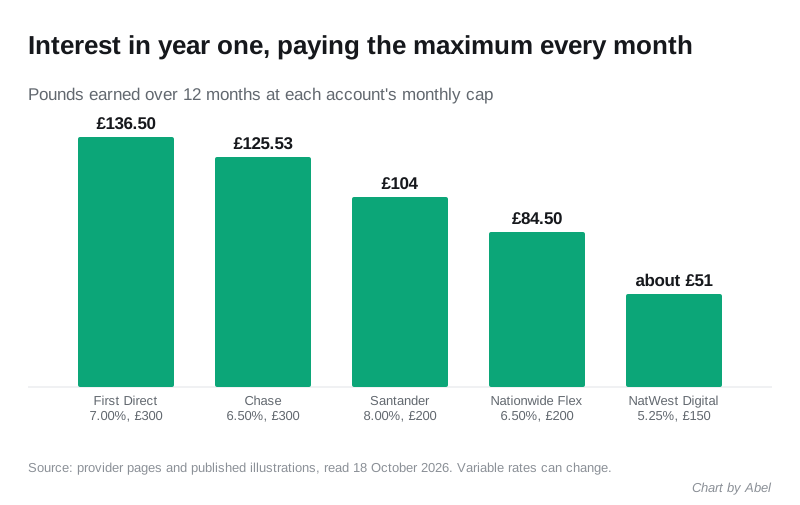
The best regular savings account app is not the one with the biggest number on it. On 18 October 2026 Santander’s Regular Saver advertises the highest rate in the UK at 8.00% AER, yet it earns less in a year than First Direct at 7.00% or Chase at 6.50%, because Santander only lets you pay in £200 a month and the other two take £300.
A regular saver pays a high rate in exchange for two limits: you drip money in month by month, and there is a cap on each month’s payment. Every account below is opened and run from the provider’s app, and every one needs you to hold that provider’s current account first. We read each rate from the provider’s own page on 18 October 2026.
The five worth opening, ranked by pounds earned
| Account | Rate (AER) | Fixed or variable | Monthly max | Withdrawals | Interest in year one at the max |
|---|---|---|---|---|---|
| First Direct Regular Saver | 7.00% | Fixed, 12 months | £300 (min £25) | None; you can only close it | £136.50 |
| Chase Regular Saver | 6.50% | Fixed, 12 months | £300 | Any time, no penalty | £125.53 |
| Santander Regular Saver | 8.00% (includes a 5.00% bonus) | Variable | £200 | Any time, no penalty | £104.00 |
| Nationwide Flex Regular Saver | 6.50% | Variable | £200 | Up to 3 a year | £84.50 |
| NatWest Digital Regular Saver | 5.25% on the first £5,000 | Variable | £150 (min £1) | Any time | about £51 |
The interest figures for First Direct, Chase, Santander and Nationwide are the providers’ own illustrations of paying the maximum every month. NatWest’s is our working at its published rate.
Why the headline rate earns about half
This is the part comparison tables skip. Your January payment earns 12 months of interest, but your December payment earns one. On average your money sits in the account for about six and a half months, so the interest is roughly half what the headline rate suggests on the total you pay in.
Take First Direct. You pay in £3,600 over the year and earn £136.50. That is 3.8% on the money you saved, not 7%. Chase’s £125.53 on £3,600 is 3.5%. Santander’s £104 on £2,400 is 4.3%, the best return per pound, but on a smaller pot.
That still beats an easy-access account if you are saving out of your salary each month anyway. If you already have a lump sum, do the sum differently: park it in an easy-access pot and feed the regular saver from it each month. Our regular saver calculator shows the real pounds for any rate and monthly amount.
First Direct: most money, least flexibility
First Direct pays 7.00% AER fixed for 12 months on £25 to £300 a month, which is the most interest of any account here if you max it out. The catch is access: you cannot take money out. If you need it, you have to close the account. You also need a First Direct 1st Account, so this works best if you are happy to move your main banking or run a second current account. At the end of the year the balance and interest move into a First Direct savings account.
Chase: the easiest to live with
Chase pays 6.50% AER (6.31% gross) fixed for 12 months on up to £300 a month, with interest paid monthly rather than at the end. You can withdraw any time to your Chase account with no fee and no loss of rate, which makes it the most forgiving of the five. You open it in the Chase app by tapping “Add +” and choosing Regular Saver, and you can hold one at a time. On the anniversary the balance moves to a Chase current or saver account of your choice.
If you are deciding between the two app banks, our Chase vs Monzo comparison covers the current account, since Monzo has no regular saver of its own.
Santander: top rate, small cap, falls after a year
Santander’s 8.00% AER variable is made up of a 3.00% base rate plus a 5.00% bonus for the first 12 months. After that you earn 3.00%, so set a reminder. The cap is £200 a month and interest is only paid on deposits up to £2,400 in any 12-month period. Withdrawals are penalty-free and the minimum payment is £1. You need a Santander current account, must be 16 or over, and can have one Regular Saver at a time.
Because the rate is variable, Santander can cut it during your year, unlike First Direct or Chase.
Nationwide Flex Regular Saver: watch the withdrawal count
Nationwide pays 6.50% AER variable on up to £200 a month, for current account customers only. Take money out three times or fewer in the year and you keep the rate. A fourth withdrawal drops it to 1.05% for the rest of the year. Nationwide’s own illustration of £200 on the first of each month ends the year at £2,484.50.
NatWest Digital Regular Saver: small but open-ended
NatWest’s account is different. It pays 5.25% AER variable on balances up to £5,000 and 1.00% above that, takes £1 to £150 a month, and stays open year after year rather than maturing. Withdrawals are allowed at any time. The low cap means it earns the least, but it suits small, steady saving, and NatWest warns it will give 60 days’ notice to close the account if you keep trying to pay in more than £150 a month.
How to pick
- You can save £300 a month and will not touch it: First Direct.
- You can save £300 a month but might need it: Chase.
- You can save up to £200 a month: Santander for the first year, then move.
- You save small amounts and want something that keeps running: NatWest.
- You save more than £300 a month: open two. Each account has its own cap and you can hold regular savers with different banks at once.
Interest from all of these counts towards your Personal Savings Allowance. Our page on tax on savings app interest explains when it becomes taxable. Eligible deposits at each of these banks are covered by the FSCS up to £120,000 per person, per banking licence.
Frequently asked questions
Which regular saver pays the most interest right now? In pounds, First Direct: £136.50 over 12 months if you pay in £300 every month, at 7.00% AER fixed. Santander has the higher rate at 8.00% but caps you at £200 a month, so it pays £104.
Can I have more than one regular saver? Yes, with different banks. Most banks let you hold only one of their own regular savers at a time, Chase and Santander included, but nothing stops you running First Direct, Chase and Santander side by side if you hold each bank’s current account.
Can I take money out of a regular saver? It depends on the account. Chase, Santander and NatWest allow withdrawals at any time. Nationwide allows three a year before the rate drops to 1.05%. First Direct allows none; you can only close the account.
What happens if I miss a month? You cannot make up a missed month by paying double later, because the cap applies to each calendar month. You simply earn less. Check each bank’s terms for whether missed payments affect the account.
Is a regular saver worth it if I have a lump sum? Only as part of a pair. Keep the lump sum in an easy-access account and transfer the monthly maximum into the regular saver. Paying the lump into easy access alone loses you the higher rate; trying to use only a regular saver leaves most of the money idle.
Do I need to switch my bank account? You need the provider’s current account, but it does not have to be your main one. You can open it alongside your existing bank. See our bank switching guide if you want to move fully and pick up a switching bonus.