Cash ISA Limit 2027: £12,000 Cap and What Your App Does
The cash ISA limit falls to £12,000 from 6 April 2027 for under-65s. What happens to money already saved, transfers, and cash in investing apps.
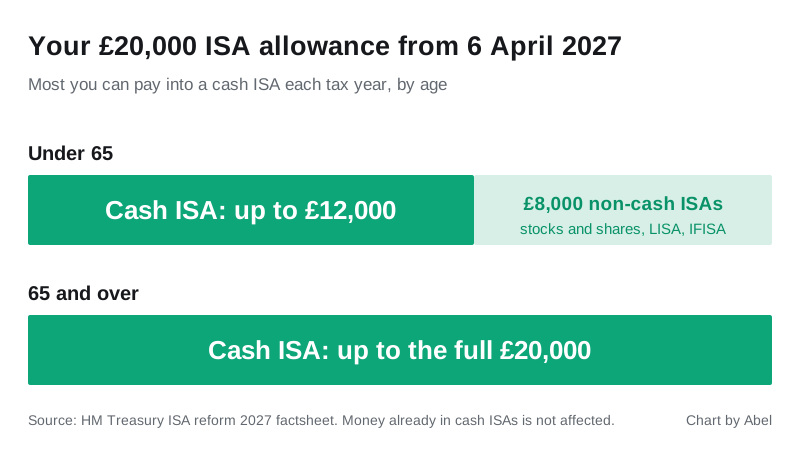
The cash ISA limit for 2027 is £12,000 a year for anyone under 65, down from £20,000 today. The change starts on 6 April 2027, the first day of the 2027/28 tax year. Your overall ISA allowance stays at £20,000, so the other £8,000 can still go into a stocks and shares ISA, a Lifetime ISA or an Innovative Finance ISA. It just cannot sit in cash.
If you save through Monzo, Chip, Plum, Moneybox, Trading 212 or any other app, three things change: how much the app will let you pay in, whether you can move money from an investing ISA back into cash, and how interest on cash inside an investing ISA is taxed. Here is each one, using the rules in HM Treasury’s ISA reform 2027 factsheet.
The short answer
| Up to 5 April 2027 | From 6 April 2027, under 65 | From 6 April 2027, 65 and over | |
|---|---|---|---|
| Overall ISA allowance | £20,000 | £20,000 | £20,000 |
| Most you can pay into cash ISAs | £20,000 | £12,000 | £20,000 |
| Transfer from a stocks and shares ISA into a cash ISA | Allowed | Not allowed | Allowed |
| Transfer from a cash ISA into a stocks and shares ISA | Allowed | Allowed | Allowed |
| Interest on uninvested cash inside a stocks and shares ISA | Tax-free | 22% charge | 22% charge |
| Money already held in cash ISAs | Stays tax-free | Stays tax-free | Stays tax-free |
Who keeps the full £20,000
The higher cash limit applies from the start of the tax year in which you turn 65, not from your birthday. So someone whose 65th birthday falls in, say, February 2028 can pay up to £20,000 into cash ISAs from 6 April 2027, because that birthday falls inside the 2027/28 tax year. The same date switches off the transfer ban described below.
Apps will need your date of birth to apply this, which they already hold from the identity checks when you opened the account. If an app refuses a payment you believe you are entitled to make, ask it to check which tax year it is treating as your 65th.
What happens to money already in your cash ISA
Nothing. The cut applies to new money paid in from 6 April 2027. A balance you built up before then stays inside the wrapper, keeps earning tax-free interest and does not count toward the new £12,000 figure. You do not need to withdraw it, move it or tell anyone.
That is also why the current tax year matters. 2026/27 is the last year most people can put a full £20,000 into cash. If you have a large sum in a taxable easy-access account and a good chance of using it, filling this year’s allowance before 5 April 2027 shelters more than you can ever add in one go again. Our best cash ISA apps comparison covers where to put it, and the cash ISA vs savings calculator shows whether the wrapper is worth it on your balance and tax band.
What changes inside a savings app
For apps that only offer cash ISAs, such as the Cash ISA pots on Monzo or the cash ISAs offered through Chip and Plum, the practical change is a lower ceiling. From 6 April 2027, an under-65 should expect the app to block deposits once the year’s total across all their cash ISAs reaches £12,000.
Two details are worth knowing:
- The £12,000 is shared across every cash ISA you pay into that year. Since April 2024 you have been allowed to pay into more than one ISA of the same type in a tax year. If you split new money between two cash ISA apps, the combined total is what counts. Each app sees only its own deposits, so keeping track is your job, and HMRC can void subscriptions over the limit.
- Flexible ISAs still work as before. If your cash ISA is flexible, you can take money out and put it back in the same tax year without using up more allowance. That makes a flexible cash ISA a better home for an emergency fund under a smaller cap, because a withdrawal in a bad month does not permanently cost you allowance. Check the terms: not every app’s cash ISA is flexible.
Moving an ISA from an investing app into cash
This is the change most likely to catch people out. From 6 April 2027, anyone under 65 will not be allowed to transfer money from a stocks and shares ISA or an Innovative Finance ISA into a cash ISA. The Treasury added the ban so the £12,000 cap cannot be bypassed by paying £20,000 into an investing ISA and then switching it to cash.
Transfers the other way are still allowed. You can move cash ISA savings, including old balances from previous years, into a stocks and shares ISA at any time. That makes it a one-way door for under-65s: if you move money from cash into investments after 6 April 2027, you cannot bring it back into a cash ISA later. Before you use an app’s transfer feature to consolidate, be sure you are happy for that money to stay invested or sit as cash inside an investing ISA. Our guide to stocks and shares ISA apps compares the main investing platforms.
Cash sitting inside an investing ISA
Some investing apps pay interest on money you have not yet invested in a stocks and shares ISA. From 6 April 2027, interest on uninvested cash held in a stocks and shares ISA or an Innovative Finance ISA will face a flat-rate 22% charge. The aim is to stop people treating the investing side of their allowance as a second cash ISA.
The factsheet sets out two related rules:
- Money market funds are the only “cash-like” asset recognised from April 2027. You can hold them as part of a stocks and shares ISA, and the 22% charge on interest does not apply to their returns. But a portfolio made up entirely of cash-like assets will not qualify for the ISA. There has to be some genuine investment alongside.
- The charge falls on interest, not on the cash itself. Holding uninvested cash briefly between trades is not banned. Leaving it there for months to earn interest becomes less attractive.
If your investing app currently pays interest on uninvested ISA cash, check how it pays it: as interest on a cash deposit or as returns from a money market fund. Our Trading 212 review explains how that platform handles cash.
What to do before 6 April 2027
- Use this year’s cash allowance if you have the money. £20,000 into cash ISAs is still possible until 5 April 2027.
- Pick a flexible cash ISA for money you might need. Under a £12,000 cap, losing allowance to a withdrawal costs more.
- Decide on investing transfers before the deadline if you are under 65. After 6 April 2027 a stocks and shares ISA cannot be moved back into cash.
- Do not pay more into cash ISAs than the cap. If you split new money across apps, add up the total yourself.
- Consider a Lifetime ISA for a house deposit. It sits outside the cash limit, although the Treasury is consulting on replacing it. See our best apps for saving a house deposit.
Frequently asked questions
Is the cash ISA limit for 2027 £12,000 for everyone? No. It is £12,000 for savers under 65. Savers aged 65 and over keep a £20,000 cash limit, starting from the tax year in which they turn 65.
Do I have to take money out of my cash ISA before April 2027? No. The limit applies to new money paid in from 6 April 2027. Existing balances stay tax-free and do not count toward the £12,000.
Can I still move an old cash ISA to a new provider? Yes. Moving cash ISA savings from one provider to another is a transfer, not a new subscription, so it does not use the £12,000. Always use the provider’s transfer process rather than withdrawing the money yourself, or it loses its ISA status.
Can I put £12,000 in a cash ISA and £8,000 in a stocks and shares ISA? Yes, if you are under 65. That uses the full £20,000 overall allowance. You could also split the £8,000 across a Lifetime ISA (up to £4,000) and a stocks and shares ISA.
Will interest on cash in my Trading 212 or other investing ISA still be tax-free? From 6 April 2027, interest on uninvested cash held in a stocks and shares ISA faces a 22% charge. Returns from money market funds are not caught, so it depends on how your app pays interest.
Does the £12,000 limit apply to Junior ISAs or Lifetime ISAs? The Treasury’s reform factsheet sets the £12,000 cap on cash ISAs for adults. A Lifetime ISA has its own £4,000 limit inside the £20,000 overall allowance, and Junior ISAs have a separate allowance.
Sources
- HM Treasury, ISA reform 2027: anti-circumvention rules factsheet, checked 5 October 2026.
- GOV.UK, Individual Savings Accounts, for transfers, flexible ISAs and subscription rules.