Faster Payments Limit UK: Why Your App Blocked the Transfer
The Faster Payments limit is £1 million, but your app sets its own cap. Why a transfer gets blocked or held for up to four days, and what to do next.
The Faster Payments limit in the UK is £1 million per payment. That is the ceiling of the scheme itself, run by Pay.UK. Almost nobody gets to use it. The number that actually decides whether your transfer goes through is the one your bank or money app sets for your account, and that figure is usually far lower, varies by app, and can change depending on who you are paying and whether they are new.
If a transfer has just been refused, held or “sent for review”, this page walks through the five things that cause it, in the order they usually bite, and what to do about each.
Two limits, not one
There are two separate limits stacked on top of each other:
- The scheme limit. Pay.UK allows individual Faster Payments of up to £1,000,000. This is the most any bank can send through Faster Payments in one go.
- Your provider’s limit. Each bank and app sets its own caps under that ceiling, per payment and per day, and often different ones for personal and business accounts. Pay.UK says as much on its own page: the organisations offering the service “can set their own limits, depending on how the payment is sent, and the type of account”.
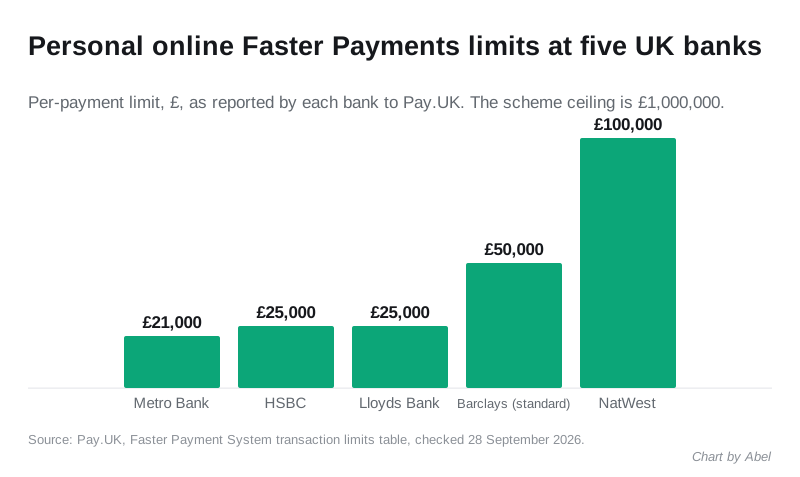
Pay.UK publishes a bank-by-bank table of limits supplied by the providers themselves. A few examples from it for personal online banking: HSBC £25,000, Lloyds £25,000, NatWest £100,000, Metro Bank £21,000, and Barclays £50,000 as standard. Monzo and Starling are both listed at the full £1,000,000, but with the note that individual account limits apply, and Monzo adds that payments over £10,000 are subject to further checks.
That footnote is the whole story for app users. The table tells you what the bank’s systems can do; your account’s limit is set separately.
Where to find your own limit
Monzo does not print a single transfer figure on its limits help page. It shows your current daily bank transfer limit inside the app, alongside your card and ATM limits, and invites you to request an increase there. Starling likewise quotes the £1,000,000 scheme ceiling in its guides rather than a fixed personal cap. Community reports from Monzo customers point to a £10,000 daily default that some have had raised to £25,000, but treat that as a starting point, not a promise, and check your own figure before you need it.
Practical rule: if you are about to move a large sum (a house deposit, a car, a tax bill), open the app a week ahead, find the limits screen, and ask for a raise then. A request made at 4pm on completion day is the one that gets stuck.
The five reasons a transfer gets blocked or held
1. It is over your daily or per-payment limit
The most common cause, and the easiest to fix. Daily limits usually include every outgoing bank transfer you have made that day, so three smaller payments in the morning can leave no room for a fourth. Options: request a higher limit in the app, split the payment across days, or send the balance another way (see CHAPS below).
2. The payee is new to you
Banks treat the first payment to someone new as the riskiest moment, because that is where most scams happen. Expect extra questions (“what is this payment for?”, “has anyone told you to move money?”) and sometimes a lower limit for a first payment. Answer the questions honestly. If you pick a vague reason to get past the screen and it turns out to be a scam, it can weaken a later reimbursement claim.
3. Confirmation of Payee flagged a mismatch
Before the money leaves, most UK banks check the name you typed against the name on the receiving account. You will see a match, a close match (often with the correct name shown), or no match. A “no match” is not an error to click through. It is the single strongest warning that you are about to pay the wrong account, whether through a typo or because a fraudster has swapped the bank details on an invoice. Phone the payee on a number you already had, not one in the email, and confirm the details before you continue.
4. The bank is holding it on suspicion of fraud
Since 9 October 2024, UK payment firms can delay an outgoing sterling payment by up to four business days if they have reasonable grounds to suspect fraud or dishonesty by someone other than you. They must tell you it is being held, why, and what you need to do to release it. In practice this is the “your payment is under review” message. Replying quickly with whatever they ask for (an invoice, a completion statement, a screenshot of the conversation) is the fastest route out.
5. The receiving account cannot take it
Some accounts, particularly certain savings accounts and older building society accounts, do not accept Faster Payments at all, or cap what they will receive. If the money bounces back, check the receiving account’s own terms before blaming the sender’s app.
When Faster Payments is the wrong tool
For a sum above your app’s limit, CHAPS is the usual answer. It is the Bank of England’s same-day high-value system, has no upper limit, and is what conveyancers use on completion day. The catch is that many app-only providers do not let personal customers send CHAPS at all, and the high-street banks that do usually charge a fee and set a same-day cut-off time. Check both with your bank before the day you need it.
The other option is to send in instalments across several days within your limit. It is slower, but free, and every instalment usually arrives within minutes.
If you have already been scammed
Faster Payments scams are covered by the Payment Systems Regulator’s reimbursement rules, in force since 7 October 2024. Most victims of authorised push payment scams must be refunded by their bank, up to a maximum of £85,000 per claim, and the bank can apply an excess of up to £100. Report it to your bank straight away, because claims must be made within 13 months of the last payment. The PSR’s reimbursement page explains who qualifies.
It also matters which kind of account you sent from. The rules apply to Faster Payments and CHAPS from UK payment accounts; our guide to whether digital banks are safe covers the difference between a full bank and an e-money app.
Which app has the highest limit?
Limits are set per customer and change, so be sceptical of any league table, including the one on Pay.UK, which reflects what providers report. For the everyday comparison of the two biggest app banks, see Monzo vs Starling, and our Monzo review and Starling Bank review for how each handles limits and support when a payment is stuck.
Frequently asked questions
What is the Faster Payments limit in the UK? The scheme allows individual payments of up to £1,000,000. Your own bank or app sets a lower limit for your account, which is the one that applies to you, and it can differ for personal and business accounts.
Why has my bank transfer been put on hold? Usually because it is over your limit, it is going to a new payee, the name did not match, or the bank suspects fraud. Since October 2024 a bank can hold a payment for up to four business days while it checks, but it must tell you why and what it needs.
Can I increase my Faster Payments limit? Often, yes. Most app banks, including Monzo, let you request a higher limit in the app, and the bank decides case by case. Ask a few days before a big payment rather than on the day.
How long can a Faster Payment take? Most arrive within seconds or minutes. Starling says a few take between two and 24 hours, and a payment held for a fraud check can be delayed by up to four business days.
What should I do if Confirmation of Payee says no match? Stop and check. Contact the person or business on a phone number you already trust, not one from the email or invoice, and confirm the account name and details before sending anything.
Is CHAPS better for large payments? For very large sums, yes. CHAPS has no upper limit and settles the same day, but many app-only accounts cannot send it and banks that offer it usually charge a fee.
Sources
- Pay.UK, Faster Payment System transaction limits (scheme limit and provider table).
- Starling Bank, guide to Faster Payments.
- Monzo Help, account limits.
- Payment Systems Regulator, APP scams reimbursement requirement (PS24/7, maximum £85,000).
- The Payment Services (Amendment) Regulations 2024, payment delays of up to four business days.