Premium Bonds vs Savings Account: Who Wins at 4.35%
Premium Bonds pay 4.35% on paper, but a typical £10,000 holder gets about 3.5%. When a savings app beats them, and when tax flips the result.
The Premium Bonds vs savings account question got more interesting in the autumn of 2026. NS&I raised the prize fund rate twice this year, first to 3.80% from the July draw and then to 4.35% from the September draw, with the odds shortened to 21,000 to 1 for each £1 Bond. At the same time the best easy-access savings apps were paying around 5% including bonuses. On the headline numbers the app wins. On the numbers most people actually receive, and after tax, the answer depends on two things: how much you hold and which tax band you are in.
Short version: a basic-rate taxpayer with under about £20,000 is usually better off in a good savings app. A higher-rate taxpayer with a large pot, who has already used their ISA allowance, often does better in Premium Bonds. The workings are below.
The 4.35% is an average, not what you get
The prize fund rate is the total value of prizes paid each month, expressed as an annual percentage of all eligible Bonds. It is not a rate anyone is paid. Your return is whatever ERNIE draws for you, and the prize fund is lopsided: in the September 2026 draw table published by NS&I, 6,449,929 of the 6,533,031 prizes were £25, £50 or £100. Those small prizes make up 80% of the prize money. The other 20% goes on roughly 83,000 prizes of £500 or more, including two of £1 million, which almost nobody will ever see.
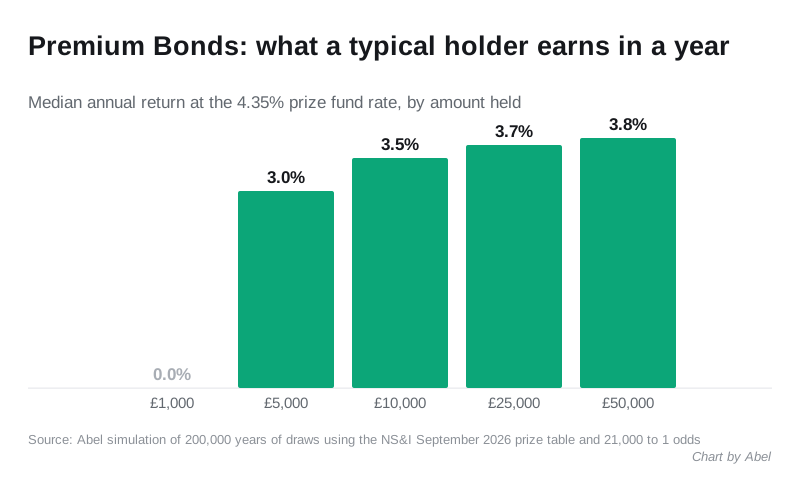
So the useful figure is the median: the return a holder with average luck receives. We ran 200,000 simulated years of draws using NS&I’s own prize table and odds. The results:
| Amount held | Median yearly return | Chance of winning nothing in a year |
|---|---|---|
| £1,000 | 0% | about 57% |
| £5,000 | 3.0% | about 6% |
| £10,000 | 3.5% | under 1% |
| £25,000 | 3.7% | effectively nil |
| £50,000 | 3.8% | effectively nil |
The mean in every row is about 4.35%, as it should be, but the mean is dragged up by the rare big win. With £1,000 you expect about 0.57 prizes a year, so in most years you win nothing at all. The more you hold, the closer your typical return creeps towards the headline rate, but it never reaches it: at the £50,000 maximum, half of holders still earn 3.8% or less.
What a savings app pays, and the catch
At the end of September 2026 the top easy-access rates were around 5% AER, but most of the leaders get there with a first-year bonus. MoneySavingExpert’s round-up lists Trading 212 at 5.01% for new customers through its link, which is 3.6% variable plus a 1.41% bonus that lasts one year. Chip’s Smart Cash ISA was quoted at 4.74% including a 1.24% bonus for 12 months.
That matters for this comparison. Premium Bonds have no bonus to fall off. If you are the kind of saver who will not move your money when the bonus ends, compare the bonds with the underlying rate, not the headline. A 3.6% app rate against a 3.5% median bond return is close to a draw for a £10,000 saver.
Two other differences worth knowing:
- Protection. Premium Bonds are backed by HM Treasury with no limit. Savings held in a bank account, or in an app that places your money with a partner bank, are covered by the FSCS up to £120,000 per person per banking licence, a limit that rose from £85,000 on 1 December 2025.
- Access. Both are easy access, but NS&I pays out to your bank in a couple of working days, while most savings apps are same-day. New Bonds also sit out a full calendar month before they enter the draw.
Tax is what flips the result
Premium Bond prizes are tax-free. Savings interest is taxable once it goes over your Personal Savings Allowance: £1,000 a year for basic-rate taxpayers, £500 for higher-rate, and nothing for additional-rate. GOV.UK confirms that the rates on savings income rise by two points from 6 April 2027, to 22%, 42% and 47%, while the allowances stay the same.
Three worked cases, using a 4.5% app rate and the median bond returns above:
Basic-rate taxpayer, £10,000. The app pays £450, all inside the £1,000 allowance, so it is tax-free. The median Premium Bond holder gets about £350. The app is ahead by around £100 a year.
Higher-rate taxpayer, £50,000, ISA already full. The app pays £2,250. The first £500 is tax-free and the other £1,750 is taxed at 40%, a bill of £700, leaving £1,550, or 3.1% after tax. The median bond holder gets about £1,900 tax-free. The bonds win by roughly £350 a year. To match that median, this saver would need an app paying about 5.7% before tax.
Additional-rate taxpayer. With no allowance, every pound of interest is taxed at 45%, so 4.5% becomes about 2.5% after tax. Premium Bonds win at almost any holding size.
The obvious exception is a Cash ISA, which is also tax-free and pays a known rate. If you still have ISA allowance to use this tax year, a competitive Cash ISA usually beats Premium Bonds for the same money, because you get the full rate without the luck. Our round-up of the best Cash ISA apps covers the options, and our page on tax on savings app interest explains how HMRC collects it.
Who should pick which
Pick a savings app if you are a basic-rate taxpayer whose interest will stay under £1,000 a year, you hold less than £5,000 (where Premium Bonds most years pay nothing), or you are happy to switch accounts each year to keep chasing the bonus rates. Our list of the best easy-access savings apps is the place to start.
Pick Premium Bonds if you are a higher or additional-rate taxpayer, your ISA allowance is already used, you hold a sizeable sum, and you would rather not move money every 12 months. They also suit money you want at the Treasury rather than a single bank above the FSCS limit.
Split it if you are unsure. Many people keep an emergency fund in an app for same-day access and put a larger long-term pot in Premium Bonds. Our guide to where to keep an emergency fund walks through that set-up.
Frequently asked questions
Are Premium Bonds better than a savings account in 2026? For most basic-rate taxpayers with modest savings, no: a good easy-access app pays more than the median Premium Bond return of about 3.5% on £10,000. For higher-rate taxpayers with large sums and a full ISA, Premium Bonds often come out ahead once tax on savings interest is taken off.
What is the Premium Bonds prize fund rate now? 4.35% from the September 2026 draw, with odds of 21,000 to 1 for each £1 Bond. It was 3.80% for the July and August 2026 draws. The rate is variable and NS&I can change it at any time.
How much will I win with £10,000 in Premium Bonds? With average luck, about £350 a year, a median return of roughly 3.5%. You would expect around six prizes a year, most of them £25, £50 or £100. A quarter of holders at that level get 2.5% or less.
Is it worth putting £1,000 in Premium Bonds? Not for the return. With £1,000 you win nothing in more than half of all years, because you expect only about 0.57 prizes a year. A savings app will pay you interest every month on the same money.
Do I pay tax on Premium Bond prizes? No. All prizes are tax-free and do not count towards your Personal Savings Allowance, which is the main reason higher-rate taxpayers favour them.
Can I lose money in Premium Bonds? You cannot lose the amount you put in, and it is fully backed by HM Treasury. You can lose value to inflation, though, if your prizes in a year come to less than the rise in prices.
Sources
Prize table and odds from NS&I’s press release of 18 August 2026 and its Premium Bonds product page, checked 30 September 2026. Savings rates from MoneySavingExpert, September 2026. Tax rates and allowances from GOV.UK. The median returns are our own simulation of NS&I’s published prize table and will move whenever NS&I changes the rate or prize mix.