Lifetime ISA Charge Cut to 20% for Homes Over £450,000
From 29 October a Lifetime ISA used on a home over £450,000 is charged 20%, not 25%. Plus the cash ISA limit stays, Revolut loans and Plum's new permission.
The Budget on 28 October changed three things that app savers use every day: the Lifetime ISA, the cash ISA limit and Help to Save. HMRC set out the detail in its ISA newsletter the next morning. Away from the Budget, Revolut has started lending in the UK and Plum has a new FCA permission to point savers towards investing.
The Lifetime ISA charge drops to 20% on homes over £450,000
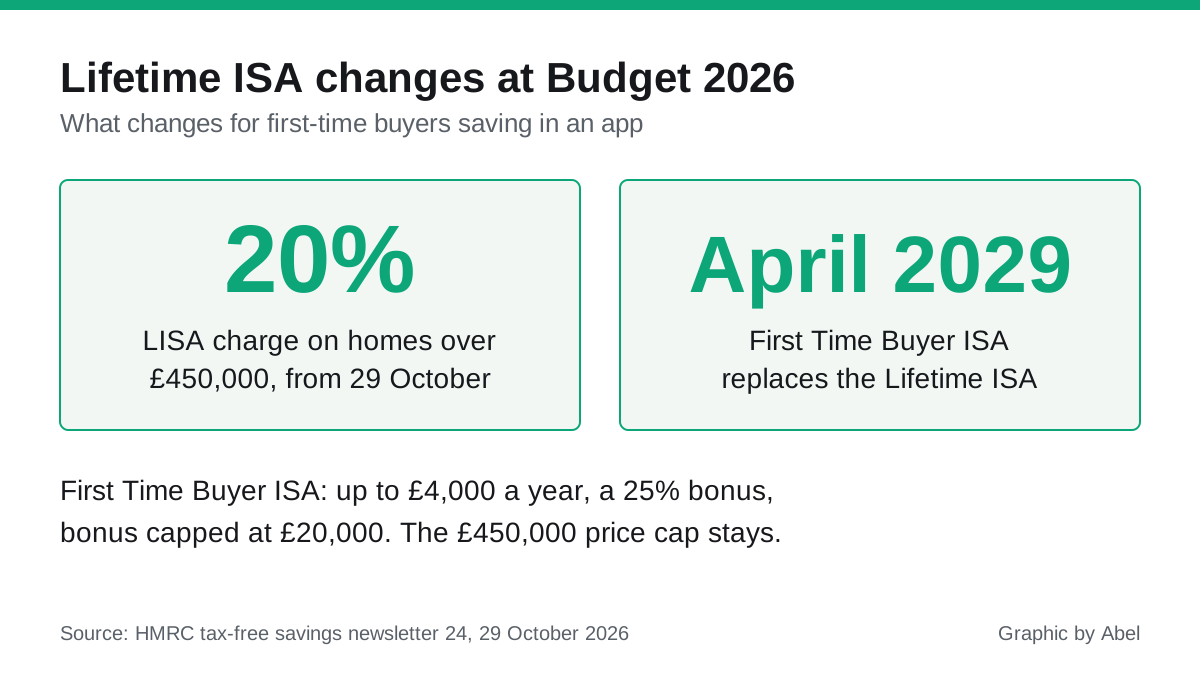
From 29 October 2026, a first-time buyer who uses a Lifetime ISA to buy a home costing more than £450,000 pays a 20% withdrawal charge instead of 25%, according to HMRC’s tax-free savings newsletter. The £450,000 cap itself has not moved, so a purchase under it is still charge-free, and the 25% charge still applies to any other withdrawal before age 60. The money still goes through your conveyancer with the usual declaration forms. The cut does not apply to withdrawals already made.
Why it matters: a 25% charge takes back more than the 25% bonus added, so buyers in pricier areas who went over the cap lost some of their own money. At 20% the charge takes back the bonus and no more. If you are saving for a deposit, our guides to the best Lifetime ISA apps and apps for saving a house deposit explain how the account works.
The same newsletter confirms a new First Time Buyer ISA from April 2029, which will replace the Lifetime ISA for new savers. It allows up to £4,000 a year with a 25% government bonus, capped at £20,000 in total and worked out on the final balance, and you can hold only one at a time. You will not be able to transfer a Lifetime ISA into it, but both can go towards the same purchase.
The cash ISA limit stays at £20,000
The plan to cut the cash ISA limit to £12,000 from 6 April 2027 has been dropped. HMRC says the annual cash ISA limit of £20,000 will be kept and the regulations that brought in the lower limit will be revoked. The government also says it will work with providers on a new incentive for people opening a stocks and shares ISA for the first time, with the design still to come. Our pages on the best cash ISA apps and opening a cash ISA in an app cover the account itself.
Revolut starts offering personal loans in the UK
Revolut said on 26 October that it would begin offering personal loans of £2,000 to £25,000 in the UK, repayable over one to five years, with no fee for paying early, City AM reported. Revolut says funds arrive within minutes of approval. Any loan application can involve a hard credit search, so if you are checking your options first, our guide to whether credit apps affect your score explains the difference between soft and hard searches.
Plum gets FCA approval for targeted support
Plum has been authorised by the Financial Conduct Authority to offer targeted support through its investment company, Saveable Limited, The Independent reported on 23 October. Targeted support is a new FCA category that sits between free general guidance and paid personal advice: a firm can suggest ready-made options to groups of customers in similar circumstances. Plum says its first use will be prompting customers with large cash balances to consider investing, through its AI assistant, in the coming weeks. It is not a personal recommendation, so the decision is still yours. Our Plum review covers the app’s fees and protection.
Help to Save moves to banks and credit unions in spring 2028
The reformed Help to Save scheme will start in spring 2028, HMRC confirmed in the same newsletter. Instead of one government-run account, it will be offered by several providers; Nationwide and Lloyds have confirmed they will take part, and many credit unions are expected to. Help to Save is for people on certain benefits, including Universal Credit, and the current scheme carries on until then.