Best Net Worth Tracker Apps UK Since Moneyhub Closed
Moneyhub's consumer app shut in July 2026. Here is which net worth tracker app UK savers can use now, what each one connects to, and what still needs typing in.
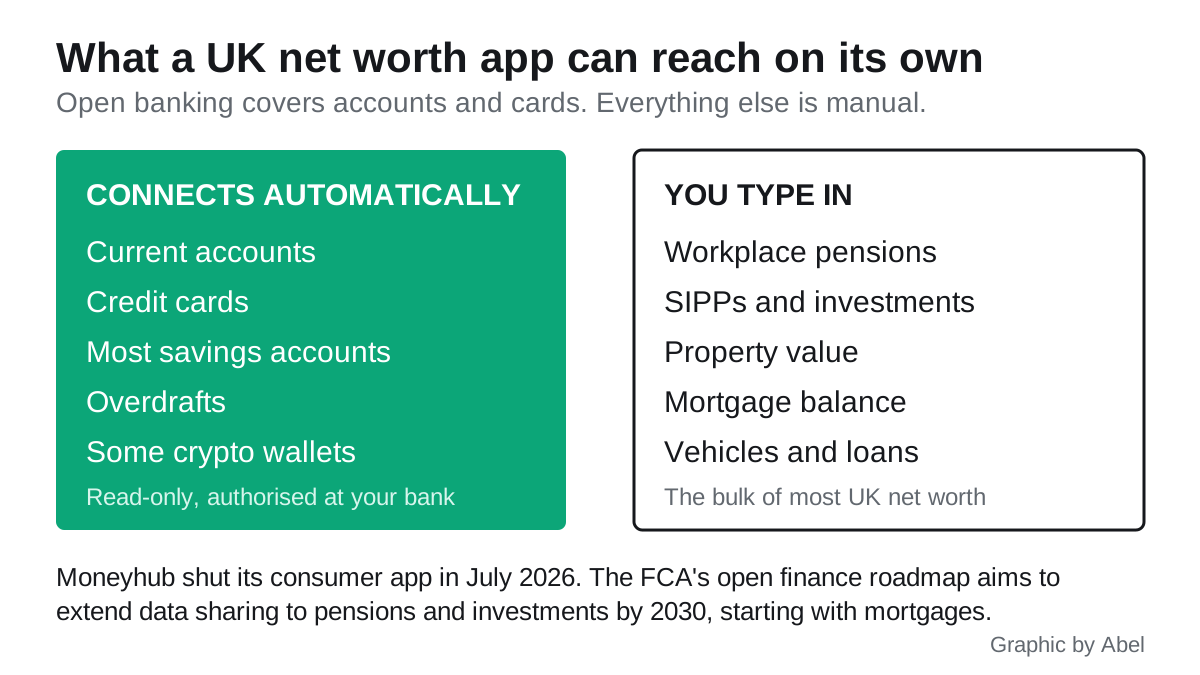
Finding a net worth tracker app in the UK got harder in 2026, not easier. Moneyhub, the app most often recommended for pulling savings, pensions, property and debt into one running total, handed its consumer app to WPS Advisory and switched it off in July 2026. Money Dashboard went the same way in 2023. What is left is a short list of apps that each do part of the job, and one structural limitation that no app on the UK market has solved yet.
This guide covers what is actually available now, what each tool can connect to automatically, what you will still be typing in by hand, and how to build a total you trust in an evening.
Why net worth is harder to track than spending
Budgeting apps work because open banking works. Since 2018, UK banks have been required to let a regulated third party read your current account and credit card data with your permission, so an app can show every transaction across every bank you use without you lifting a finger.
Open banking stops there. It does not cover pensions, stocks and shares ISAs, general investment accounts, mortgages as a live balance, or property values. Those are the four things that make up most of a typical British household’s net worth by middle age. The Financial Conduct Authority has published an open finance roadmap that aims to extend data sharing to pensions, mortgages and investments, but it runs to 2030 and starts with SME lending and mortgages, not your SIPP.
So every “net worth tracker” in the UK is really a bank aggregator with a manual assets section bolted on. Judge them on two things: how much they connect automatically, and how painless the manual half is.
Emma
Emma is the most established UK-built option and the one most likely to still be here in three years. It connects current accounts, credit cards, savings and crypto wallets, and it lets you add offline assets by hand, from a house to a car to a collection.
The catch is the plan. Emma’s free Basic tier allows only two bank logins, and net worth as a feature starts at the Pro tier. If you have current accounts at two banks, a credit card elsewhere and a savings pot at a fourth provider, the free version will not hold your picture, let alone total it. Emma is a paid product for this job, and worth judging as one. Our full Emma app review goes through the tiers in more detail.
Best for: people who want one app for both budgeting and net worth and will pay for it.
Snoop
Snoop, owned by Vanquis Banking Group since 2023, is primarily a bill-cutting and spending app. It reads your accounts over open banking and nags you about overpriced broadband and forgotten subscriptions, which it does well. Net worth sits on its paid Plus tier and is closer to a balance total than a wealth picture: no pension modelling, no investment holdings, no property valuation engine.
Best for: someone who wants the spending savings first and will take a balance total as a bonus. See our Snoop app review for the rest.
Lumio
Lumio is built around couples, which is unusual and genuinely useful if your finances are shared. It connects to more than 100 UK providers, and its published list goes past the banks into investment platforms, so it will pick up more of the picture automatically than a pure budgeting app. Anything it cannot reach, including a house or a car, is added manually.
Best for: two people who want one combined total rather than two separate ones.
Your pension and investment providers
Do not overlook the apps you already have. Most UK pension and investment providers show a current value in their own app, and several have added account-finding tools. Monzo, for example, now runs a pension finder that traces old workplace pots and brings them under one login. If most of your wealth sits with two or three providers, checking those apps once a month and typing two numbers into a tracker is less work than hunting for an aggregator that can reach them.
If you have lost track of an old workplace scheme, the government’s free Pension Tracing Service finds the contact details for you. It will not tell you the value, only who to ask, but that is usually the hard part.
The spreadsheet is still a serious answer
A monthly spreadsheet does the one thing no UK app does well: it holds everything, including the illiquid and the awkward, in a form you control and can still read in ten years. One row per account, one column per month, a total at the bottom. It takes about fifteen minutes a month once the rows exist, and nothing can discontinue it, paywall it or delete your history.
The honest comparison is that apps win on daily spending and lose on assets. A lot of people end up running both: an app for the current accounts, a sheet for the net worth. Our budgeting app versus spreadsheet comparison covers the same trade-off for day-to-day money.
Five things that quietly wreck the number
- Broken connections. Open banking links drop, often after a bank security update. A total that has not refreshed in three weeks is not a total. Check the connection dates, not just the headline figure.
- Counting the house but not the mortgage. Net worth is assets minus liabilities. Add the property at a realistic value and the outstanding mortgage as a negative in the same session, or the number is fiction.
- Optimistic property values. Use a sold-price figure for something comparable on your street, not an online instant valuation you would never accept in a sale. Under-value it slightly and let reality surprise you upwards.
- Forgetting the money you owe yourself. Tax set aside if you are self-employed is not net worth, it is a bill with a date on it. Our guide to the best money apps for the self-employed covers keeping that separate.
- Assuming an app equals FSCS protection. A tracker holds data, not money. Where an app also holds funds, check whether it is a bank account or an e-money account, because the protection is not the same. See are budgeting apps safe.
How to build a total you trust, in one evening
- List every account on paper first: current accounts, savings, ISAs, pensions from every job, investments, crypto, property, vehicles.
- Write the liabilities next: mortgage, loans, credit cards, car finance, anything on buy now pay later.
- Pick one tool, app or sheet, and enter the liabilities before the assets. It sets the tone.
- Connect what connects automatically. Accept that pensions and property will be manual.
- Put a recurring reminder on the same date each month. The trend over a year is the useful output, not today’s figure.
What to do if you were a Moneyhub user
Moneyhub moved its consumer app to WPS Advisory, which runs it as WPS LifeStage on the same underlying platform, and users who did not opt in had their data deleted rather than transferred. If that was you, your history is gone and you are starting fresh. Export anything you still have access to before you switch, and see our Money Dashboard alternatives page, which covers the same migration problem from the previous round of closures.
Frequently asked questions
What is the best net worth tracker app in the UK? There is no single winner since Moneyhub closed. Emma is the strongest all-rounder if you will pay for the tier that includes net worth, Lumio suits couples, and Snoop is better at cutting bills than at tracking wealth. Anyone with significant pension or investment assets should expect to add those by hand whichever app they choose.
Can a UK app track my pension automatically? Usually not. Open banking covers current accounts and cards, not pensions, so most trackers rely on you typing the value in. A few apps have direct links to individual providers such as PensionBee or Nutmeg, but there is no universal pension feed yet. The FCA’s open finance work is meant to change that by 2030.
Is it safe to connect my bank to a net worth app? Connecting through open banking is read-only and you authorise it with your bank, not by handing over your login to the app. Check the provider is authorised by the FCA, and remove access you no longer use. Our guide on revoking open banking access shows how to cut a connection off from the bank’s side.
What counts towards net worth? Everything you own at a realistic value, minus everything you owe. Cash, savings, ISAs, pensions, investments, property and vehicles on one side; mortgage, loans, credit cards, overdrafts and finance agreements on the other. Future income does not count, and neither does money you are holding for a tax bill.
How often should I update my net worth? Monthly is enough for most people, and the same date each month makes the trend readable. Updating weekly turns normal market movement into anxiety, and updating once a year means you spot a problem far too late to fix it cheaply.
Do I need to pay for a net worth tracker? Not necessarily, but the free tiers are thin. Emma’s free plan caps you at two bank connections and keeps net worth for its paid Pro tier, and Snoop puts it behind Plus. A spreadsheet costs nothing and handles pensions and property better than any free app tier on the UK market.