Hargreaves Lansdown Review: 0.35% Fee, £150 Share Cap
Hargreaves Lansdown charges 0.35% on funds but caps shares and ETFs at £150 a year. What £10k to £250k costs, dealing and FX fees, and who HL suits.
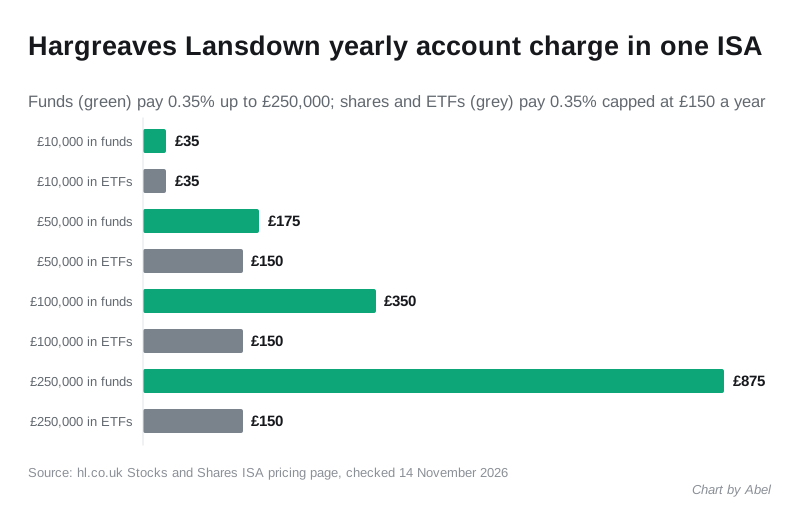
This Hargreaves Lansdown review comes down to one split in the price list. Funds held at HL pay an account charge of 0.35% a year with no cap until £250,000. Shares, ETFs and investment trusts pay the same 0.35%, but it stops at £12.50 a month, which is £150 a year. Two people with £100,000 in an ISA can pay £350 or £150 for the same platform depending on what they hold.
HL cut its headline fee from 0.45% to 0.35% in March 2026, cut online share dealing to £6.95, and started charging £1.95 to buy or sell a fund outside a monthly Direct Debit. Every figure below comes from HL’s own pricing pages, checked on 14 November 2026.
Hargreaves Lansdown at a glance
| What you pay or get | |
|---|---|
| Account charge, funds | 0.35% up to £250,000, 0.25% from £250,000 to £1m, 0.10% from £1m to £2m, nothing above £2m |
| Account charge, shares, ETFs, trusts, gilts | 0.35%, capped at £12.50 a month (£150 a year) |
| Fund dealing online | £1.95 a trade; free by monthly Direct Debit |
| Share and ETF dealing online | £6.95 a trade, or £3.95 if you placed 20 or more trades last month; free by monthly Direct Debit |
| Phone or postal dealing | £29 a trade |
| Overseas shares | Foreign exchange charge of 0.99% on the first £10,000 of a trade, 0.50% from £10,000 to £25,000, 0.20% above |
| Lifetime ISA | 0.25% on funds, shares capped at £3.75 a month |
| Junior ISA | No account charge and no online dealing charge |
| Minimum to open a Stocks and Shares ISA | £100 |
| Free | Opening, closing, transfers out, holding cash, moving cash between HL accounts |
What HL actually charges
The account charge is worked out each month on the value of your investments at the end of the previous month, and taken automatically. Cash you have not invested is not charged.
For funds the charge is tiered. On £300,000 of funds, HL charges 0.35% on the first £250,000 (£875) and 0.25% on the next £50,000 (£125), so £1,000 a year. One detail catches people out: the tiers apply to each account separately, not to everything you hold at HL. HL’s own example is £200,000 of funds in a SIPP and £200,000 in a Fund and Share Account: both sit in the 0.35% band, even though the total is £400,000. Vanguard, by contrast, adds your accounts together for its fee.
For shares and anything that trades like a share (ETFs, investment trusts, bonds, gilts, VCTs), the 0.35% stops at £12.50 a month. You hit that cap at about £42,900 invested. Above it, the charge on that part of your account never rises.
The chart at the top shows the effect in a single ISA:
- £10,000: £35 a year, whether funds or ETFs.
- £50,000: £175 in funds, £150 in ETFs.
- £100,000: £350 in funds, £150 in ETFs.
- £250,000: £875 in funds, still £150 in ETFs.
On top of HL’s charge you pay the running cost of each fund or ETF, set by the manager. HL says it has negotiated discounts on more than 500 funds, saving an average of 21.4% on their ongoing charge.
The ETF trick most HL reviews skip
Many of the most popular index funds have an ETF twin that tracks the same index: Vanguard’s FTSE All-World and S&P 500 trackers, for example, come as both. At HL, holding the ETF version instead of the fund version moves that money from the uncapped fund charge to the capped share charge.
The trade-off is dealing. A one-off ETF purchase costs £6.95 against £1.95 for a fund, so this only pays for larger, less frequent purchases. If you invest monthly by Direct Debit, both are free to buy, and the switch costs you nothing on the way in. Check that the ETF is on HL’s regular investing list before you rely on it, and remember you will pay £6.95 a trade when you sell.
For someone with £100,000 in global trackers, the difference is £200 a year, every year.
Dealing and FX costs
Fund trades cost £1.95 online. Share and ETF trades cost £6.95, falling to £3.95 if you placed 20 or more share trades the previous month. Monthly Direct Debit investing is free for both, which is the cheapest way to use HL. Phone and postal deals cost £29.
Overseas shares carry a foreign exchange charge on each band of the trade value: 0.99% on the first £10,000, 0.50% on the next £15,000, and 0.20% above £25,000. Buying £1,000 of a US share costs £6.95 dealing plus £9.90 FX, so £16.85, before the 0.35% holding charge. That is expensive next to Trading 212, which charges 0.15% FX and no commission. HL’s Junior ISA is the one account where the FX charge does not apply.
UK share purchases also pay 0.5% stamp duty, as they do everywhere; our stamp duty on shares explainer covers which trades are exempt.
Interest on cash
HL pays tiered interest on uninvested cash, and keeps the difference between what its banks pay and what it passes on. In a Stocks and Shares ISA the rate on the first £20,000 is 1.30% AER 1.31%, rising to 1.65% from £20,000 to £100,000. The SIPP pays more: 2.00% on the first £20,000. These rates have applied since 10 June 2026.
That is low for money you mean to leave in cash. HL itself points savers towards its Active Savings and Cash ISA products, and our best cash ISA apps list shows what is paying more.
The HL app
The app does everything most investors need: buying and selling funds, shares and ETFs, setting up regular investments, topping up an ISA or SIPP, and reading HL’s research and fund shortlists. Where HL earns its fee is the service around the app: a Bristol-based helpdesk, research notes, ready-made portfolios and the Wealth Shortlist of researched funds.
If you never phone anyone, never read the research and only buy one global tracker, that service is something you are paying for and not using.
Who HL suits, and who it does not
HL is good value for:
- Share and ETF investors above roughly £43,000 in an ISA, SIPP or Fund and Share Account, who pay a flat £150 a year per account.
- Junior ISAs. No account charge and no online dealing charge, which makes it one of the cheapest homes for a child’s investments. See our best Junior ISA apps.
- People who want help and choice: a phone line, thousands of funds and shares, and research in one place.
HL is poor value for:
- Large fund-only portfolios below £250,000 per account, which pay 0.35% with no cap. £200,000 in funds costs £700 a year in one account.
- Small ETF investors who could pay nothing to hold. InvestEngine charges no platform fee on DIY ETF portfolios.
- Frequent buyers of US shares, because of the 0.99% FX charge on smaller trades.
For a big, fund-based ISA or SIPP, Vanguard caps its fee at £375 across all your accounts, though you can only buy Vanguard products there. Our best stocks and shares ISA apps compares the wider field.
Frequently asked questions
Is Hargreaves Lansdown worth the 0.35% fee? It depends on what you hold. For shares and ETFs the charge stops at £150 a year per account, which is competitive above about £43,000. For funds there is no cap below £250,000, so a large fund portfolio pays far more than at a flat-fee platform.
Does HL charge to sell funds? Yes. Since March 2026, buying or selling a fund online outside a monthly Direct Debit costs £1.95 a trade. Regular monthly investing by Direct Debit is free.
Are HL’s fund charge tiers calculated across all my accounts? No. HL applies the tiers to each account separately, so £200,000 in an ISA and £200,000 in a SIPP are both charged 0.35%.
Is the Hargreaves Lansdown Junior ISA free? There is no account charge and no online dealing charge on HL’s Junior ISA. Fund managers’ own running costs still apply.
Does HL charge to transfer out? No. HL does not charge to close an account or to transfer it to another provider.
Is my money safe with Hargreaves Lansdown? HL is authorised by the Financial Conduct Authority (firm reference 115248) and holds client money in segregated trust accounts. Eligible investments are covered by the FSCS up to £85,000 if the firm fails. Our guide to whether investing apps are safe explains how that protection works.
Charges taken from Hargreaves Lansdown’s ISA pricing page and its overseas dealing and interest rate pages on 14 November 2026. Investments can fall as well as rise, and this review is not personal advice.